If you ask a Dominican what they ate for breakfast, the answer can be completely different depending on the day. One morning it might be a full plate of mangú with los tres golpes. Another morning it could be bread with cheese and salami, a bowl of avena, or a cup of chocolate con leche before heading out the door.
Dominican breakfast is not one specific meal. It is a mix of traditional dishes, quick foods, warm drinks, and whatever happens to be in the kitchen that morning. Some breakfasts are simple and practical, while others are big enough to keep you full until lunchtime.
And if there is one thing that connects many Dominican breakfasts, it is that they are meant to be filling.
Mangú con los tres golpes
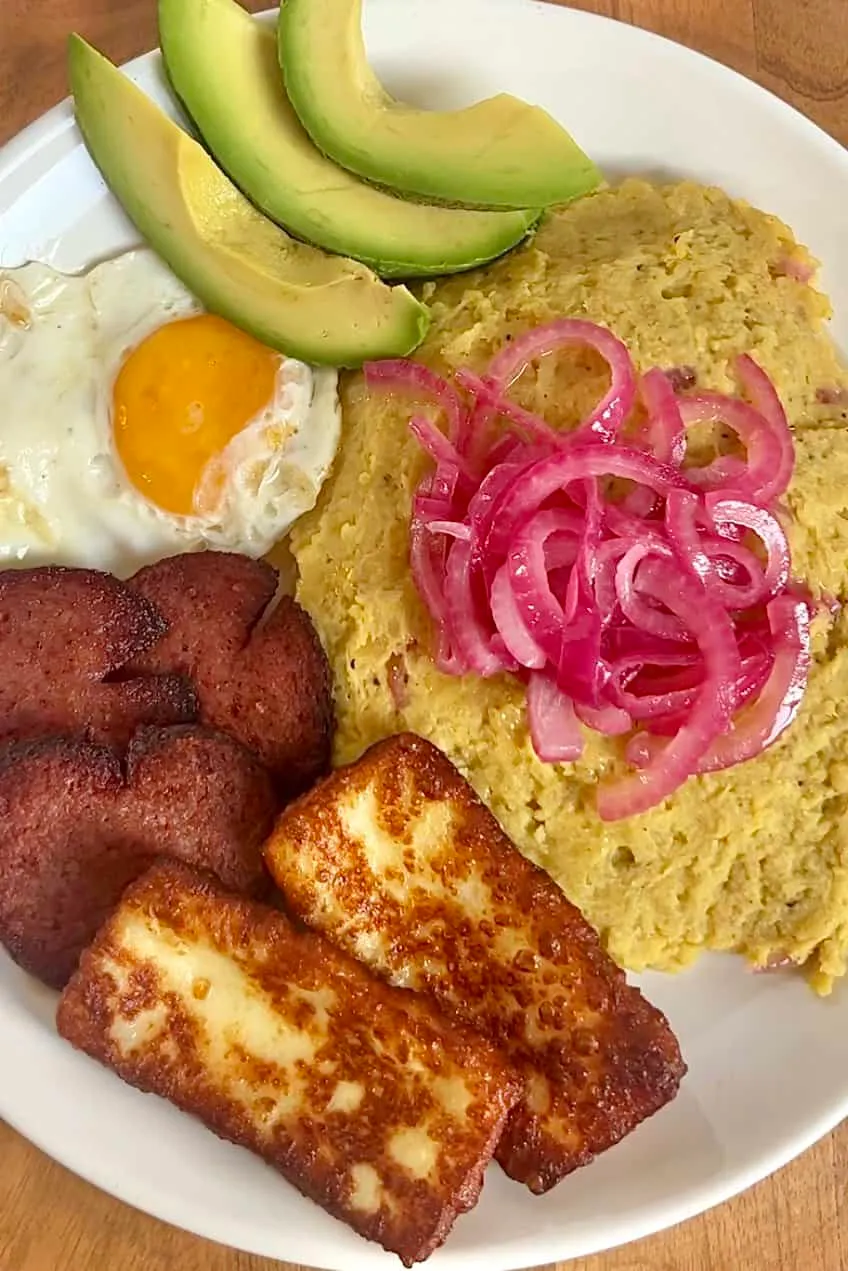
When people think about a classic Dominican breakfast, mangú con los tres golpes is probably one of the first meals that comes to mind.
Mangú is made from boiled green plantains that are mashed until soft. It is usually served with the three golpes: fried salami, fried cheese, and eggs. Sautéed onions are often added on top of the mangú, usually cooked with vinegar until soft.
It is a simple combination, but it is incredibly satisfying. The soft plantains, salty salami, crispy cheese, and eggs all work together, and it is the kind of breakfast that can keep you full for hours.
For many Dominicans, mangú is also connected to home. It is the breakfast you remember your mother, grandmother, or another family member making, especially on weekends when there is more time to cook.
Yuca and guineitos
Plantains are not the only starchy foods that show up at breakfast.
Boiled yuca is another favorite. It can be served with eggs, salami, fried cheese, or sautéed onions. Some people keep it simple with butter or a little oil.
Guineitos, or green bananas, can be prepared in a similar way. They are boiled until tender and served alongside eggs, cheese, salami, or other savory foods.
These breakfasts are hearty and practical, which is a big part of Dominican cooking. You can take an inexpensive ingredient and turn it into a meal that feeds the whole family.
Avena dominicana
Avena is another very familiar Dominican breakfast, especially for children.
Dominican-style avena is usually cooked with milk and sweetened with sugar. Cinnamon and vanilla are common additions, giving it a warm, comforting flavor.
It is thick, creamy, and filling, and for many Dominicans it brings back memories of childhood mornings before school.
Avena is also one of those foods that makes sense for everyday life. It is affordable, easy to make, and can be prepared for several people at once.
Chocolate con leche
Chocolate con leche deserves its own place on the Dominican breakfast table.
It is a warm drink made by dissolving Dominican-style chocolate in hot milk, usually with sugar and sometimes cinnamon. Depending on the household, it can be made thicker, sweeter, or more lightly flavored.
For many people, chocolate con leche is especially associated with childhood. It is the kind of warm drink a parent might make before school, often served alongside bread, eggs, cheese, or another simple breakfast.
And if you grew up drinking it, you probably have a very specific idea of what it should taste like.
Some families use chocolate tablets specifically made for preparing the drink, while others have their own preferred brand or method. Like many Dominican staples, everyone seems to have their own way of making it.
Café dominicano
Of course, we cannot talk about Dominican breakfast without talking about coffee.
Dominican coffee is often strong and sweet, and it is usually served in small cups. For many adults, that first cup of café is what officially starts the day.
Coffee can be made at home while everyone is getting ready for work or school, or it can be picked up from a nearby cafeteria or colmado.
It is also very social. Someone makes coffee and automatically asks who else wants a cup. A quick coffee can turn into a conversation at the kitchen table, even when nobody planned to sit down for long.
Bread with cheese and salami
Not every Dominican breakfast requires cooking a full meal.
Bread with cheese and salami is an easy option for busy mornings. You can eat it as is, toast the bread, or make a simple sandwich.
Dominican salami is especially popular because it is salty, savory, inexpensive, and easy to fry. Fried salami with bread and cheese is one of those combinations that can work for breakfast, a snack, or honestly almost any time of day.
This is also a good example of how Dominican breakfast can be very practical. Not every morning has time for mangú.
Eggs are everywhere
Eggs are one of the easiest ways to round out a Dominican breakfast.
They might be scrambled, fried, or prepared with onions, peppers, and other ingredients. Eggs can be served alongside mangú, yuca, guineitos, bread, cheese, or salami.
A simple plate of eggs with bread and coffee can be a perfectly normal Dominican breakfast.
And because eggs are so versatile, they are often what turns a quick breakfast into something more substantial.
Queso frito
Fried cheese is not only something you might see alongside mangú. It can be part of breakfast all on its own.
Dominican queso de freír holds its shape when fried and develops a crispy golden exterior while staying soft and salty inside.
Put it next to eggs and bread, add some salami, or serve it with mangú, and you have a breakfast that feels instantly Dominican.
It is also one of those foods that tends to disappear quickly once it hits the table.
Pastelitos and other quick breakfasts
If you are eating breakfast away from home, you have plenty of options.
Pastelitos are an easy choice when you need something quick. These fried pastries can be filled with meat, cheese, chicken, or other savory fillings, depending on where you buy them.
You may also find empanadas, sandwiches, bread, and other pastries at bakeries, cafeterias, and neighborhood food spots.
These foods are especially convenient for people heading to work or school who do not have time to sit down for a full breakfast.
Yaniqueques
Yaniqueques are another popular fried food that can show up as a quick breakfast or snack.
They are thin, crispy pieces of fried dough that are especially associated with the Dominican Republic’s coastal communities. They are simple, salty, crunchy, and very easy to eat on the go.
They are not necessarily an everyday breakfast for everyone, but if you are traveling around the Dominican Republic, you will come across them as a casual food option.
Breakfast can include leftovers
There are also no strict rules about what can be considered breakfast.
If there is leftover food from the night before, it can absolutely become breakfast the next morning.
That might mean rice and beans, leftover meat, fried plantains, yuca, or another dish that is sitting in the refrigerator.
Dominican households are practical about food. If something is already cooked and tastes good, there is no reason it has to wait until lunchtime.
Sometimes yesterday’s food makes an even better breakfast.
Breakfast before school
For Dominican kids, breakfast can look a little different from what adults eat.
A warm cup of chocolate con leche, avena, or milk might be paired with bread, cheese, eggs, or another simple food before school.
The goal is usually pretty straightforward: eat something filling before heading out the door.
For many people, these foods become tied to childhood memories. You may not think much about a cup of chocolate con leche when you are drinking it every morning, but years later, that same smell and taste can immediately take you back home.
Weekday breakfast versus weekend breakfast
During the week, breakfast is often about convenience.
People are getting ready for work and school, commuting, dealing with traffic, and trying to get out the door on time. A sandwich, bread with cheese, eggs, avena, or a quick cup of coffee may be all there is time for.
Weekends are different.
There is more time to cook a full plate of mangú. Someone might fry salami and queso de freír. Eggs are made fresh, onions are sautéed, and coffee or chocolate con leche is poured.
Breakfast can become a slow meal where people sit around the table and talk instead of rushing through it.
Dominican breakfast is not always breakfast food
One of the best things to understand about Dominican food culture is that the categories are flexible.
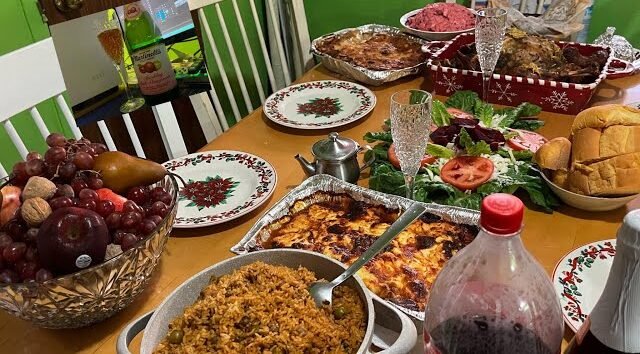
Rice and beans are usually thought of as lunch or dinner, but if there are leftovers, nobody is going to tell you that you cannot eat them in the morning.
The same goes for meat, plantains, yuca, and other foods.
Dominican cooking is less about following a strict list of foods that belong at a certain time of day and more about eating what is available and what sounds good.
A typical Dominican breakfast at home
If you wanted to put together a very traditional Dominican breakfast, you could make mangú with sautéed onions and serve it with fried salami, queso de freír, and eggs.
Pour a cup of strong Dominican coffee for the adults and make chocolate con leche for anyone who prefers something warm and sweet.
Another morning, you might boil yuca or guineitos and serve them with eggs and salami. Or make a pot of avena and serve it with bread and cheese.
There is no single correct combination.
Breakfast is part of Dominican food culture
What makes Dominican breakfast special is not just the individual dishes. It is the way those foods fit into everyday life.
It can be the smell of coffee coming from the kitchen early in the morning. It can be your mother making chocolate con leche before school. It can be a plate of mangú on a Sunday morning. It can be a pastelito grabbed on the way to work or leftover rice reheated because nobody feels like cooking.
Some breakfasts are elaborate. Others take five minutes.
Some are sweet. Others are salty and fried.
Some happen around a table with the whole family, while others happen in the car or at work.
That variety is what makes Dominican breakfast so interesting. There are traditional dishes that immediately come to mind, but there is also the everyday food that people actually eat.
And whether it is mangú con los tres golpes, a cup of chocolate con leche and bread, avena with cinnamon, yuca and eggs, or yesterday’s leftovers, Dominican breakfast is usually about one thing: starting the day with something comforting, filling, and familiar.