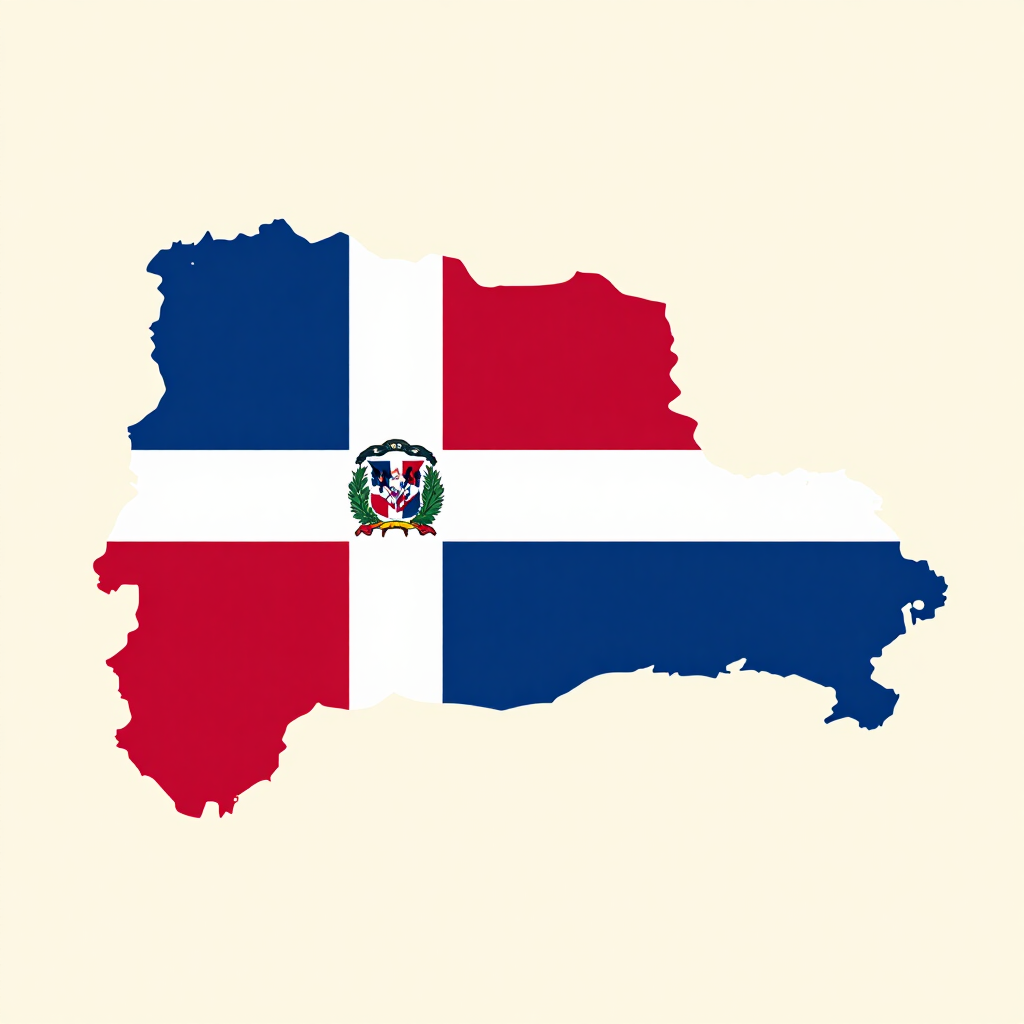
Santo Domingo is more than the capital of the Dominican Republic. It is a city where some of the earliest chapters of European colonization in the Americas took place, and its historic center still preserves many of the buildings, streets, and landmarks connected to that history.
Located on the southern coast of the island of Hispaniola, Santo Domingo was founded by the Spanish in the late 15th century. Over the centuries, it became an important center for government, religion, trade, and exploration in the Americas.
Today, you can walk through the Zona Colonial and see churches, plazas, fortresses, and stone buildings that date back hundreds of years. But the story of Santo Domingo begins even earlier, with the Indigenous Taíno people who already lived on the island.
Before Santo Domingo
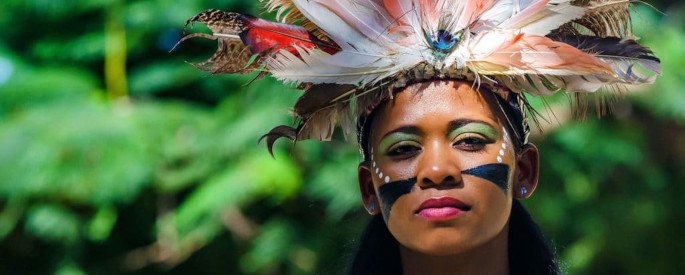
Before the Spanish arrived, Hispaniola was home to the Taínos, who lived in communities throughout the island.
The Taínos had their own villages, agriculture, trade networks, political leaders, religious traditions, and ways of life. The area where Santo Domingo would eventually be established was part of this Indigenous landscape.
In 1492, Christopher Columbus arrived on Hispaniola during his first voyage across the Atlantic. The Spanish began establishing settlements on the island soon afterward, dramatically changing the history of the Caribbean.
The founding of Santo Domingo
The first Spanish settlement that became Santo Domingo was established on the eastern side of the Ozama River in the late 1490s. The settlement was later moved to the western side of the river, where the present-day Zona Colonial developed.
Santo Domingo is generally recognized as the oldest continuously inhabited European-established city in the Americas.
Its location was important. The city sat along the Caribbean coast and near the mouth of the Ozama River, making it useful for transportation, trade, and Spanish administration.
From Santo Domingo, the Spanish expanded their presence throughout the Caribbean and eventually toward the mainland Americas.
The city became an important center
During the early years of Spanish colonization, Santo Domingo became one of the most important European settlements in the New World.
Government officials, religious leaders, merchants, soldiers, and settlers arrived in the city. Important institutions were established, including churches, administrative buildings, and educational institutions.
The city also became a launching point for Spanish expeditions to other parts of the Americas.
This is one of the reasons Santo Domingo occupies such an important place in the history of the Western Hemisphere. It was not simply a colonial town. It became a center from which Spain organized and expanded its presence in the Americas.
The Zona Colonial
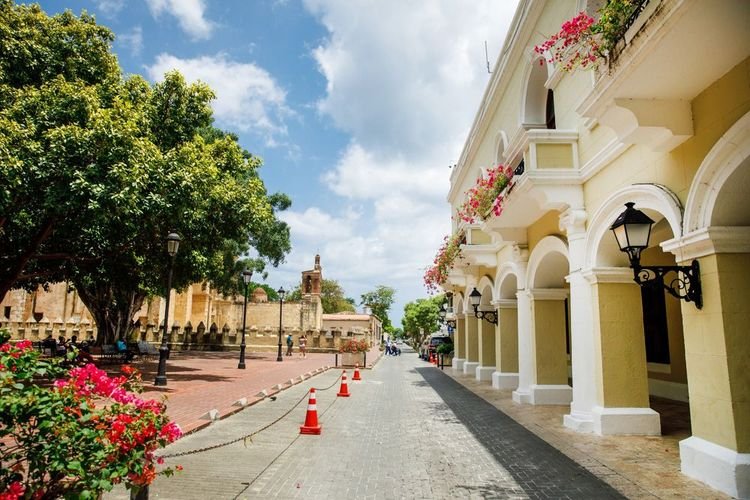
The best place to experience this history today is the Zona Colonial, also known as the Colonial City.
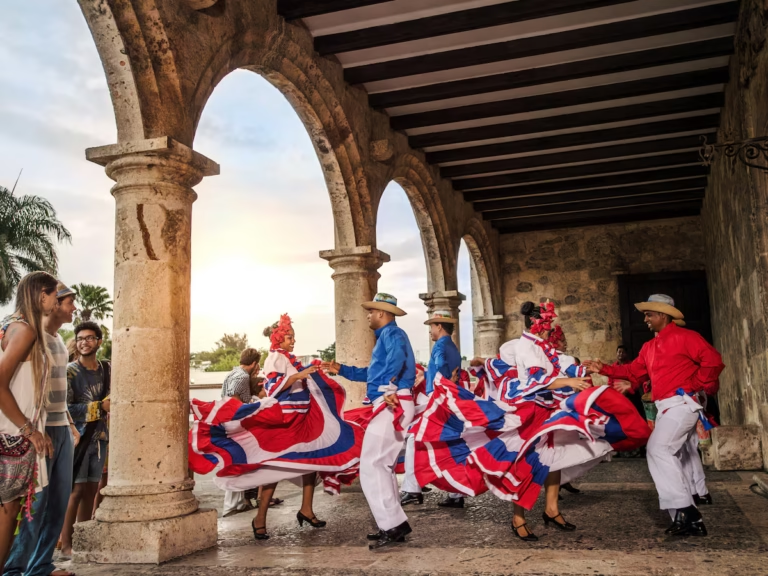
Walking through the area feels very different from walking through the modern parts of Santo Domingo. Narrow streets, colorful buildings, historic plazas, churches, and centuries-old stone structures fill the neighborhood.
One of the most recognizable landmarks is the Alcázar de Colón, a large historic building associated with the Columbus family.
Nearby, you can visit the Catedral Primada de América, commonly known as the First Cathedral of the Americas. Construction began in the early 16th century, making it one of the most important religious buildings from the early colonial period.
The oldest cathedral in the Americas
The Catedral Primada de América is one of Santo Domingo’s most famous landmarks.
Construction began in 1504, although the cathedral was not completed until decades later. Its architecture reflects a mixture of Gothic and Renaissance influences.
The cathedral is located beside Parque Colón, one of the main gathering places in the Colonial City.
Today, visitors can walk around the square, see the statue of Christopher Columbus, and explore the historic streets surrounding the cathedral.
Fortaleza Ozama
Another important landmark is Fortaleza Ozama, a fortress built to protect the city.
Construction began in the early 16th century, making it one of the oldest European military structures in the Americas.
The fortress was built along the Ozama River, giving Spanish authorities a strategic position for defending the city and controlling access to the river.
Its Torre del Homenaje, or Tower of Homage, remains one of the most recognizable structures in the Colonial City.
Santo Domingo and the early Americas
Santo Domingo’s importance went beyond Hispaniola.
The city became a base for Spanish exploration and administration throughout the Caribbean. From here, expeditions traveled to other islands and eventually to mainland territories.
People, goods, animals, crops, and ideas moved through Santo Domingo as Spain built its colonial empire.
This also meant that the city became part of a much larger and often painful history involving colonization, forced labor, slavery, Indigenous population decline, and the creation of new societies throughout the Americas.
The history of Santo Domingo cannot be separated from these realities.
A city shaped by many cultures
Although Santo Domingo began as a Spanish colonial settlement, its identity was never purely Spanish.
Taíno, African, Spanish, and later Caribbean and international influences all became part of the city’s history.
African culture, in particular, became deeply connected to Dominican society through the people who were brought to the island through the transatlantic slave trade and their descendants.
Over generations, these different influences contributed to the culture, food, music, language, religion, architecture, and traditions that developed in the Dominican Republic.
Santo Domingo today
Modern Santo Domingo is a huge and energetic city, and the historic Colonial City is only one part of it.
You can leave the centuries-old streets of the Zona Colonial and quickly find busy avenues, apartment buildings, restaurants, shopping centers, modern businesses, and neighborhoods filled with everyday Dominican life.
That contrast is part of what makes the city so interesting.
You can have breakfast in a modern café, walk past a building that is hundreds of years old, visit a historic church, stop for Dominican food, and then spend the evening listening to music or exploring another part of the city.
Why Santo Domingo matters
Santo Domingo’s history makes it one of the most historically significant cities in the Caribbean.
It was one of the earliest permanent European settlements in the Americas and became an important center for Spain’s expansion into the New World. Many of its historic buildings and streets remain, giving visitors the chance to see pieces of that early colonial history in person.
But the city is more than its colonial buildings.
Santo Domingo is a living Dominican city, shaped by centuries of history and by the people who continue to live there today. Its past is visible in the Colonial City, but its present can be found everywhere else: in the food, music, neighborhoods, businesses, baseball games, nightlife, and everyday rhythm of the capital.