Bachata is one of the sounds most closely associated with the Dominican Republic. Today, you can hear it everywhere, from Dominican neighborhoods and family parties to nightclubs, weddings, radio stations, and dance floors around the world.
But bachata was not always celebrated the way it is today.
The music began as a humble Dominican genre associated with working-class communities and everyday life. Over time, it evolved, gained new instruments and sounds, and eventually crossed international borders to become one of the most recognizable Latin music genres in the world.
Where bachata began
Bachata developed in the Dominican Republic during the first half of the 20th century, particularly among working-class communities.
Its roots are connected to earlier Dominican and Caribbean musical traditions, including bolero, son, and other guitar-based styles. The word “bachata” itself was originally used more broadly to describe a gathering or party where people came together to drink, socialize, play music, and dance.
These gatherings were often informal and took place in homes, patios, bars, and neighborhood spaces.
The music that developed from these gatherings was emotional and direct. The lyrics often focused on love, heartbreak, jealousy, loneliness, betrayal, and everyday struggles.
Bachata was once looked down on
One of the most important parts of bachata’s history is that it was not always considered respectable music.
For decades, bachata was strongly associated with poorer and working-class communities. It was often played in places that were considered outside the mainstream, and many people from more affluent parts of society looked down on the genre.
Merengue had a much more established place in Dominican public life, while bachata was often treated as music from the barrios.
That social stigma is an important part of the story because it makes bachata’s eventual international success even more remarkable.
The music that was once dismissed became one of the Dominican Republic’s biggest cultural exports.
The sound of early bachata
Early bachata was centered around the guitar.
A typical group might include acoustic guitars, bass, percussion, and güira. The sound was intimate and rhythmic, with a strong connection to bolero and other Caribbean guitar traditions.
The lyrics were usually just as important as the music.
Bachata singers sang about things people actually experienced: falling in love with someone who didn’t love them back, being left behind, missing someone, or dealing with the complications of relationships.
That emotional honesty became one of bachata’s defining characteristics.
José Manuel Calderón and the early recordings
José Manuel Calderón is widely recognized as one of the pioneers of recorded bachata.
His 1962 recording “Borracho de Amor” is often cited as one of the earliest commercially recorded bachata songs.
Calderón and other early artists helped establish the sound of the genre during a period when the Dominican Republic was going through major political and social changes.
Bachata continued developing through the following decades, with different musicians bringing their own styles to the genre.
Luis Vargas and the changing sound of bachata
By the 1980s and 1990s, bachata was beginning to change.
Artists such as Luis Vargas helped introduce a more modern and energetic sound. The guitar became more prominent, and the music developed a stronger rhythmic style that appealed to younger audiences.
Other artists, including Antony Santos, also played an important role in bringing bachata to a much larger Dominican audience.
Bachata was becoming harder to ignore.
Antony Santos takes bachata to another level
Antony Santos became one of the most influential figures in modern bachata.
Known as “El Mayimbe de la Bachata,” he helped transform the genre’s sound and popularity during the 1990s.
His music helped make bachata more commercially successful while keeping its emotional, guitar-driven character.
For many Dominicans, this period marked a major change in how bachata was viewed. The music was no longer something that belonged only to the margins. It was becoming a major part of Dominican popular culture.
Juan Luis Guerra helped change perceptions
Juan Luis Guerra also played an important role in bringing bachata to wider audiences.
Although he is known for many styles of Dominican music, his bachata recordings demonstrated how the genre could be sophisticated, beautifully arranged, and commercially successful without losing its Dominican identity.
His music helped introduce international listeners to Dominican rhythms and showed that bachata could exist alongside other respected forms of Latin music.
Aventura changes everything
Then came Aventura.
Formed in New York by Dominican and Dominican-American musicians, Aventura helped take bachata to an entirely new level internationally.
Led by Romeo Santos, the group combined traditional bachata with R&B, pop, hip-hop, and other contemporary influences.
Their music appealed to younger Dominican audiences and to listeners who may not have previously listened to traditional bachata.
Songs such as “Obsesión” became massive international hits.
For many people outside the Dominican Republic, Aventura was their first real introduction to bachata.
Romeo Santos becomes the King of Bachata
After Aventura, Romeo Santos built one of the most successful solo careers in Latin music.
He became known as the “King of Bachata” and helped establish the genre as a major force in international Latin music.
His music continued to combine traditional bachata elements with modern pop and R&B influences.
He also collaborated with artists from different genres, bringing bachata to audiences who might never have discovered it otherwise.
Bachata goes global
Today, bachata is no longer limited to the Dominican Republic.
You can find bachata dance classes in cities throughout the United States, Europe, Latin America, and other parts of the world. There are international bachata festivals, dance competitions, concerts, and entire communities built around the music and dance.
The genre has become part of the global Latin music scene.
At the same time, Dominican artists continue to shape what bachata sounds like and how it evolves.
Bachata as a dance
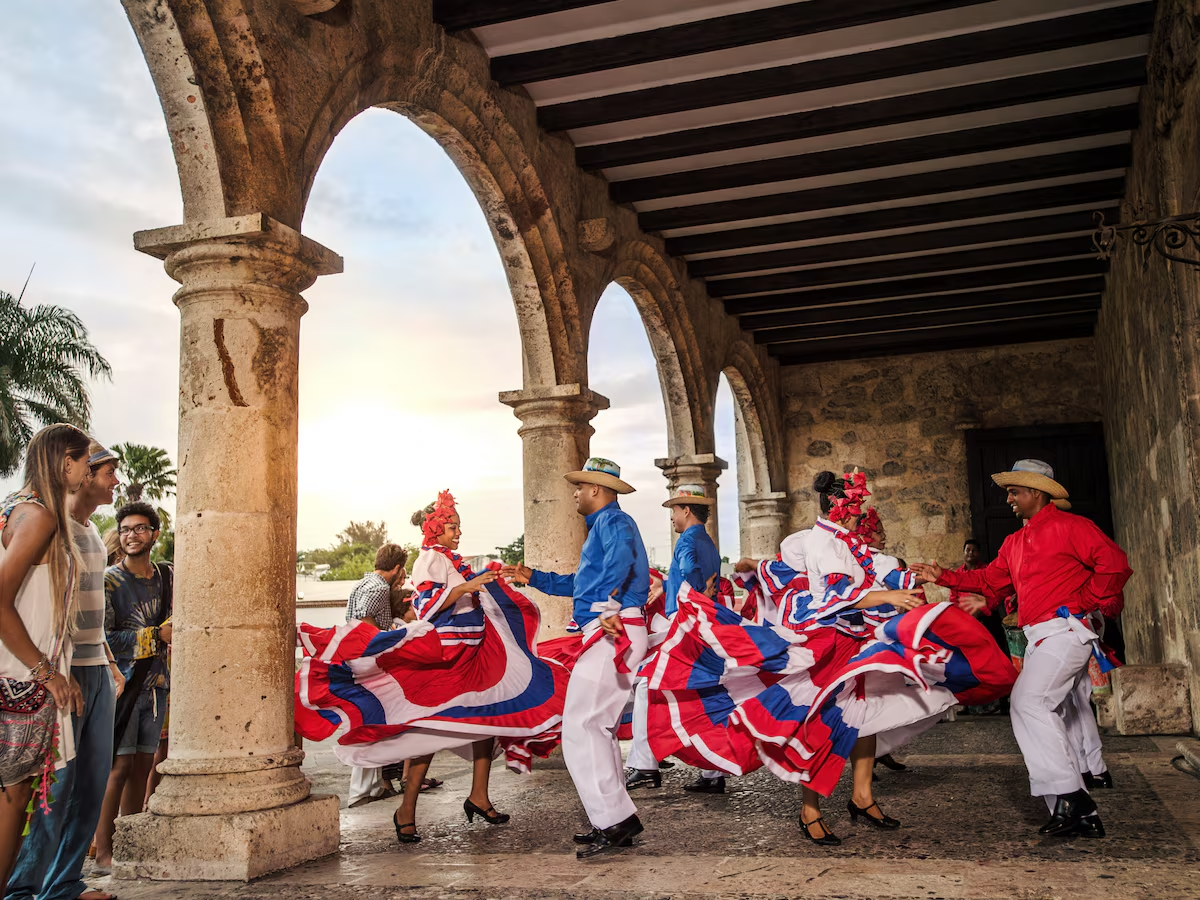
Bachata is not just music. It is also a dance that has become popular around the world.
The basic movement is relatively simple, with a distinctive side-to-side rhythm and a tap on the fourth beat. But dancers have developed countless styles and variations.
Traditional Dominican bachata dancing tends to have a more relaxed, playful, and rhythmic feel, with close attention to the music and footwork.
International bachata styles have also developed, often incorporating turns, body movement, and choreography.
You can now walk into a dance studio in places far from the Caribbean and find people learning how to dance bachata.
Why bachata means so much to Dominicans
For Dominicans, bachata is more than a genre of music.
It is connected to memories, relationships, parties, family gatherings, heartbreak, dancing, and everyday life.
It is the kind of music that can completely change the atmosphere when someone puts it on.
And there is something particularly Dominican about the way bachata tells stories. The songs can be dramatic, romantic, funny, painful, or even a little messy, just like real relationships.
That emotional honesty is part of what makes the genre so relatable.
From the barrios to the world
The story of bachata is also a story about how Dominican culture can travel.
A genre that was once associated with working-class communities eventually became a global phenomenon. Dominican musicians took the sounds they grew up with, changed them, experimented with them, and introduced them to new audiences.
Today, bachata is instantly recognizable around the world.
But its roots remain firmly Dominican.
When you hear the guitar, güira, and bongó come together in a bachata song, you’re hearing a musical tradition that has been shaped by generations of Dominican artists and listeners.
Bachata’s journey from neighborhood gatherings to international stages is one of the best examples of how Dominican culture has influenced the world.