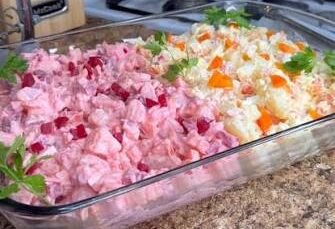
If you have ever seen Dominican potato salad at a family gathering, you may have noticed that it can look very different from the classic creamy potato salad you might be used to. Instead of being white or pale yellow, Dominican ensalada rusa can be bright pink.
The reason is simple: beets.
But the story behind Dominican potato salad goes beyond its color. Ensalada rusa is a staple at Dominican celebrations, especially during the holidays, and every family seems to have its own version. Some make it lightly pink, while others add enough beets to turn the entire bowl a deep rosy color.
It is creamy, slightly sweet, savory, and usually served cold, making it the perfect side dish for a big Dominican meal.
What Makes Dominican Potato Salad Pink?
The pink color comes from cooked beets.
Beets have a naturally intense red-purple pigment that spreads easily when they are mixed with the other ingredients. Once the beets come into contact with the mayonnaise and potatoes, that color starts to work its way through the salad.
Depending on how much beet is used, the finished ensalada rusa can range from a pale pink to a much deeper shade.
There is no food coloring involved. The color comes naturally from the beets.
What Is Ensalada Rusa?
Ensalada rusa is the Dominican version of a type of vegetable salad that is popular throughout Latin America and other parts of the world.
The base is usually made with boiled potatoes, carrots, peas, and mayonnaise. Beets are commonly added, and hard-boiled eggs are also popular.
The vegetables are cooked until tender, cooled, and then mixed together with the mayonnaise and seasonings. The salad is usually chilled before serving.
The result is creamy and hearty, but the vegetables keep it from feeling quite as heavy as some other holiday sides.
Why Do Dominicans Add Beets?
Beets give ensalada rusa its signature color, but they also add flavor.
They have a naturally earthy sweetness that works well with the mild potatoes and carrots. When combined with creamy mayonnaise and a little salt or acidity, the flavors balance each other out.
They also make the salad look especially festive.
That is one reason you will often see a pink ensalada rusa at Dominican Christmas and New Year’s celebrations. It brings a little color to a table that is already filled with rich and comforting dishes.
Is Dominican Potato Salad Always Pink?
No.
This is one of those Dominican dishes where the recipe can change quite a bit from one household to another.
Some families consider beets essential. Others leave them out completely. Some use only a small amount, giving the salad a light pink tint, while others use enough to make the entire dish bright pink.
The same goes for the other ingredients.
One family may add plenty of hard-boiled egg. Another might use more carrots and peas. Some people add onion, while others keep the recipe very simple.
There is no single version that every Dominican family follows.
What Goes Into Dominican Ensalada Rusa?
A typical Dominican version can include:
- Potatoes
- Carrots
- Peas
- Beets
- Mayonnaise
- Hard-boiled eggs
- Salt
- Black pepper
- Vinegar or lemon juice
The exact combination depends on the recipe.
The potatoes are usually the main ingredient, while the carrots, peas, and beets add color and texture. The mayonnaise brings everything together into the creamy consistency that makes the salad recognizable.
Some families also have their own additions that have become part of their holiday tradition.
Why Is It Called Ensalada Rusa?
Ensalada rusa means “Russian salad,” and the dish is related to the Russian Olivier salad.
As the salad spread internationally, different countries adapted it to local tastes and ingredients. Across Latin America, you will find many variations, with different vegetables, seasonings, and proportions.
The Dominican version became part of the country’s own food traditions, particularly as a side dish for large family meals and celebrations.
So while the name points back to Russia, the version you find on a Dominican holiday table has its own identity.
A Dominican Holiday Favorite
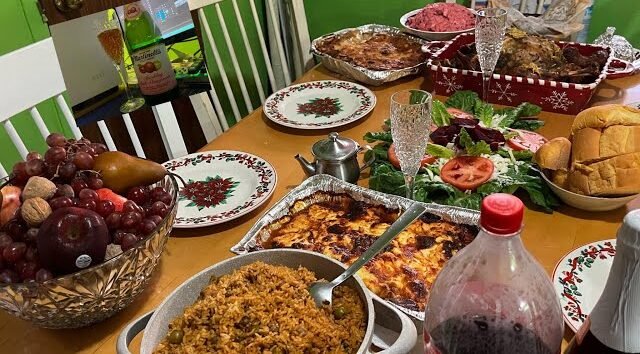
Ensalada rusa is especially popular around Christmas and New Year’s, when Dominican families are already preparing large meals with dishes like pernil, pasteles en hoja, moro de guandules, and other favorites.
It also works well at Thanksgiving, birthdays, weddings, and other gatherings where there is a big spread of food.
One reason it has become such a staple is that it can be made ahead of time. In fact, letting the salad chill for a while gives the flavors time to come together.
It is the kind of side dish that can be prepared before guests arrive and simply brought out when it is time to eat.
The Pink Potato Salad Debate
Like many Dominican recipes, ensalada rusa can inspire strong opinions.
Some people want plenty of beets because they love the color and flavor. Others prefer a mostly white potato salad with just potatoes, carrots, peas, and mayonnaise.
There are also plenty of opinions about the texture. Some like their potatoes very soft, while others prefer them to hold their shape.
And then there is the question of mayonnaise.
Every family seems to have its own idea of how creamy the salad should be.
These little differences are part of what makes Dominican food so personal. A dish can be recognizable across the country while still tasting completely different depending on who made it.
Why the Beets Are Usually Cooked Separately
If you have ever worked with beets, you already know how quickly they can stain everything around them.
That is especially true with ensalada rusa.
Beets are often cooked separately from the potatoes and other vegetables so their strong color does not tint everything before the salad is even assembled.
Once they are ready, they can be diced and mixed in with the rest of the ingredients.
From there, the natural beet color slowly spreads through the mayonnaise, giving the salad that familiar pink appearance.
A Side Dish That Belongs on the Holiday Table
There is something about a bowl of pink ensalada rusa sitting in the middle of a Dominican holiday table that immediately makes the meal feel festive.
It works with roasted meats, rice, plantains, yuca, and all the other dishes that tend to fill a Dominican celebration.
And because it is served cold, it adds a different texture to a plate that might otherwise be filled with hot food.
For many families, it is simply part of the expected spread. If it is missing, someone is probably going to notice.
More Than Just a Pink Potato Salad
The bright color might be what makes Dominican ensalada rusa stand out, but the dish is really about the combination of simple ingredients and the memories attached to it.
It is the salad someone makes every Christmas. The bowl that gets passed around at a family party. The side dish that looks different depending on who prepared it.
And yes, sometimes the entire thing turns bright pink because someone was generous with the beets.
That is part of the charm.
So the next time you see a pink Dominican potato salad, you know exactly what gives it that color. Beets are the secret behind the rosy hue, but the creamy potatoes, vegetables, and family traditions are what make ensalada rusa such a beloved part of Dominican food.