The Dominican Republic has been shaped by people from every part of society: political leaders who fought for independence, writers and artists who gave Dominican culture a voice, musicians who brought merengue and bachata to the world, athletes who became international icons, and everyday people whose work helped shape the country we know today.
Some names are recognized around the world, while others are better known within the Dominican Republic. Together, their stories help explain Dominican history, culture, and identity.
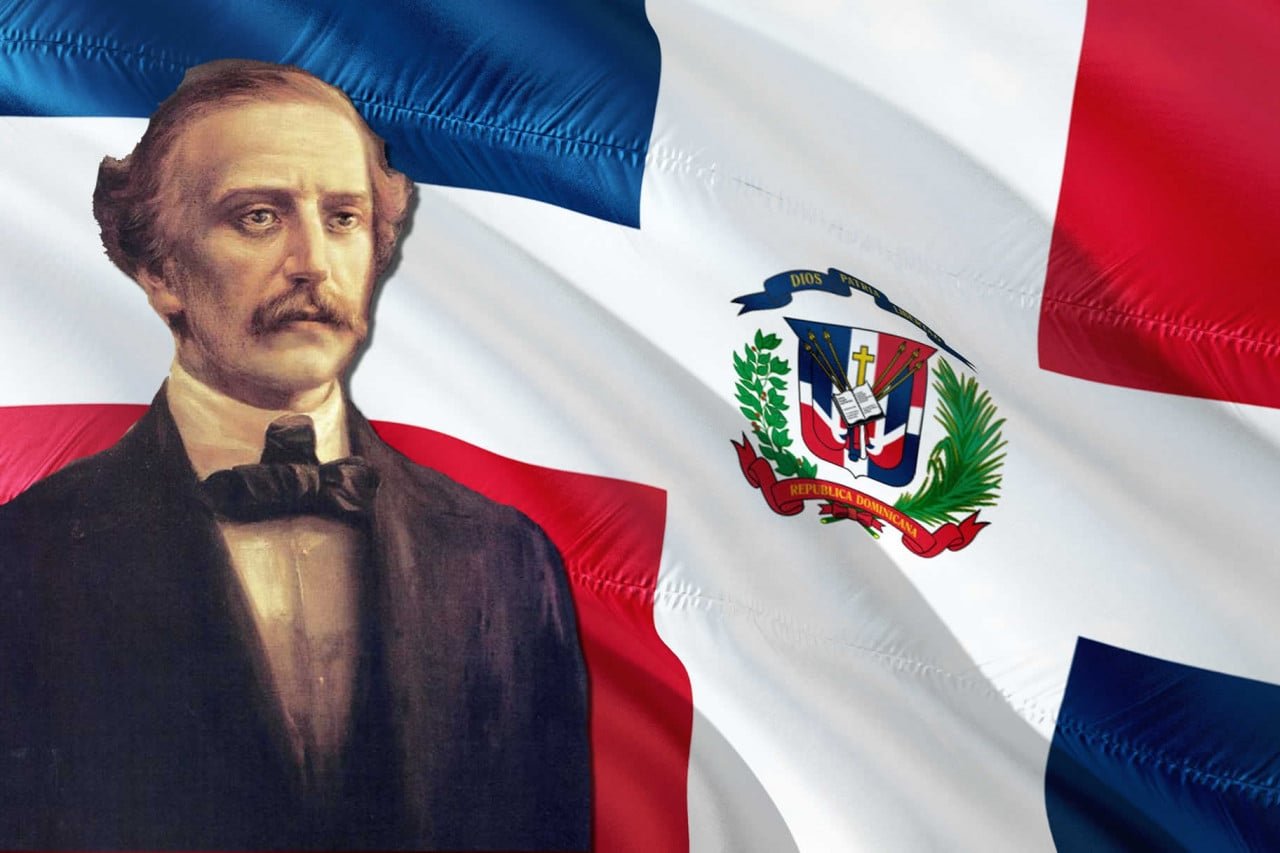
Juan Pablo Duarte
Juan Pablo Duarte is one of the most important figures in Dominican history and one of the founding fathers of the Dominican Republic.
Born in Santo Domingo in 1813, Duarte believed that the Dominican people should have their own independent nation. He helped establish La Trinitaria, a secret organization dedicated to achieving independence from Haitian rule.
Duarte’s vision went beyond simply separating the eastern part of the island. He imagined a free Dominican nation with its own government and identity.
His name remains deeply connected to Dominican independence, and his image can be found throughout the country, from monuments and statues to schools and streets named in his honor.
María Trinidad Sánchez
María Trinidad Sánchez was one of the women who played an important role in the Dominican independence movement.
She supported the independence cause and helped the members of La Trinitaria. After independence was declared in 1844, she continued to oppose political forces she believed were working against the ideals of the new nation.
She was eventually executed in 1845.
Today, María Trinidad Sánchez is remembered as a national heroine and as an important example of the role Dominican women played in the country’s early history.
Salomé Ureña
Salomé Ureña was one of the Dominican Republic’s most important poets and educators.
Born in 1850, she became known for her poetry as well as her dedication to education. At a time when opportunities for women were limited, she believed strongly in educating Dominican women and girls.
She founded the Instituto de Señoritas, an important educational institution for women.
Her work helped open doors for future generations of Dominican women, and she remains one of the country’s most respected literary and educational figures.
Pedro Henríquez Ureña
Pedro Henríquez Ureña was a Dominican writer, philosopher, educator, and intellectual whose influence extended far beyond the Dominican Republic.
He spent much of his life traveling and working throughout Latin America and became an important figure in Hispanic American literature and scholarship.
His work focused on language, literature, education, and the development of Latin American culture.
For a country relatively small in size, the international influence of Dominican intellectuals like Henríquez Ureña is an important part of its history.
Juan Bosch
Juan Bosch was a writer, politician, and one of the most important political figures in modern Dominican history.
He became the country’s first democratically elected president after the end of the Trujillo dictatorship, winning the 1962 election and taking office in 1963.
His presidency was short-lived, but his political ideas and writings continued to influence Dominican politics for decades.
Bosch was also a prolific writer whose short stories and novels are considered important works of Dominican literature.
Oscar de la Renta
Oscar de la Renta is one of the most internationally recognized Dominicans.
Born in Santo Domingo in 1932, he became one of the world’s most famous fashion designers. After studying art in Spain, he began working in the fashion industry and eventually built his own global fashion house.
His designs became associated with elegance and were worn by celebrities, public figures, and first ladies.
Even after achieving international fame, de la Renta remained closely connected to the Dominican Republic. He supported education, children’s causes, and communities in his home country.
His story is a powerful example of a Dominican taking something from their culture and background and bringing it to an international audience.
Johnny Ventura
Johnny Ventura was one of the most influential figures in Dominican merengue.
Known as “El Caballo Mayor,” he helped modernize merengue and bring it to new audiences. His energetic performances, choreography, and musical style made him one of the most recognizable Dominican entertainers of his generation.
His influence went beyond music. He also entered politics and served as mayor of Santo Domingo.
For generations of Dominicans, Johnny Ventura was more than a musician. He was part of the soundtrack of Dominican life.
Juan Luis Guerra
Juan Luis Guerra helped introduce Dominican music to audiences around the world.
His music blends merengue, bachata, bolero, jazz, and other influences, creating a sound that is unmistakably his own.
Songs such as “Bachata Rosa” and “La Bilirrubina” became hugely popular, while his albums earned international awards and recognition.
What makes Guerra particularly important to Dominican culture is the way he brought Dominican musical traditions to an international audience without separating them from their roots.
Julia de Burgos
Julia de Burgos is an important figure in Caribbean literature and poetry with deep connections to Dominican culture and the wider Hispanic Caribbean.
Her poetry explored themes of identity, freedom, womanhood, and social expectations. Her work has remained influential throughout the Spanish-speaking Caribbean and beyond.
She is an example of how Dominican and Caribbean history cannot always be separated neatly by modern national borders. The people and cultures of the Caribbean have influenced one another for centuries.
Pedro Martínez
When talking about Dominicans who changed the country’s place in the world, baseball players have to be part of the conversation.
Pedro Martínez became one of the greatest pitchers in Major League Baseball. Born in Manoguayabo, Dominican Republic, he went on to win three Cy Young Awards and became a symbol of Dominican baseball excellence.
His success also helped inspire another generation of Dominican players who dreamed of reaching the major leagues.
David Ortiz
David Ortiz, known around the world as “Big Papi,” became one of the most beloved Dominican baseball players in the United States.
Born in Santo Domingo, Ortiz became a star with the Boston Red Sox and played an important role in their World Series championships.
His personality was just as memorable as his performance on the field. His larger-than-life presence made him a cultural figure far beyond baseball.
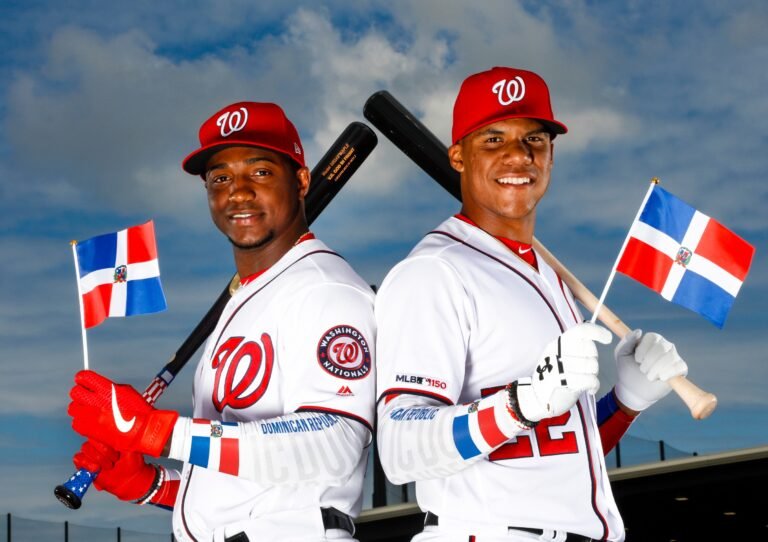
Juan Soto
Juan Soto represents a newer generation of Dominican baseball stars.
Born in Santo Domingo in 1998, Soto reached Major League Baseball as a teenager and quickly became known for his exceptional hitting ability and plate discipline.
His success reflects how deeply baseball is connected to Dominican life. For many young Dominicans, players like Soto are not distant celebrities. They are examples of what is possible when talent, opportunity, and years of work come together.
Why These People Matter
The people who shaped the Dominican Republic did not all come from the same world.
Some fought for independence. Some wrote books and poetry. Some changed education. Others transformed music, fashion, sports, or politics.
That is what makes Dominican history so interesting. The country’s identity has been shaped not by one person or one moment, but by generations of people who left their mark in completely different ways.
And there are many more stories to tell.
From national heroes and artists to baseball players, musicians, writers, entrepreneurs, and activists, Dominican history is full of people whose lives help explain where the country came from and what it has become.