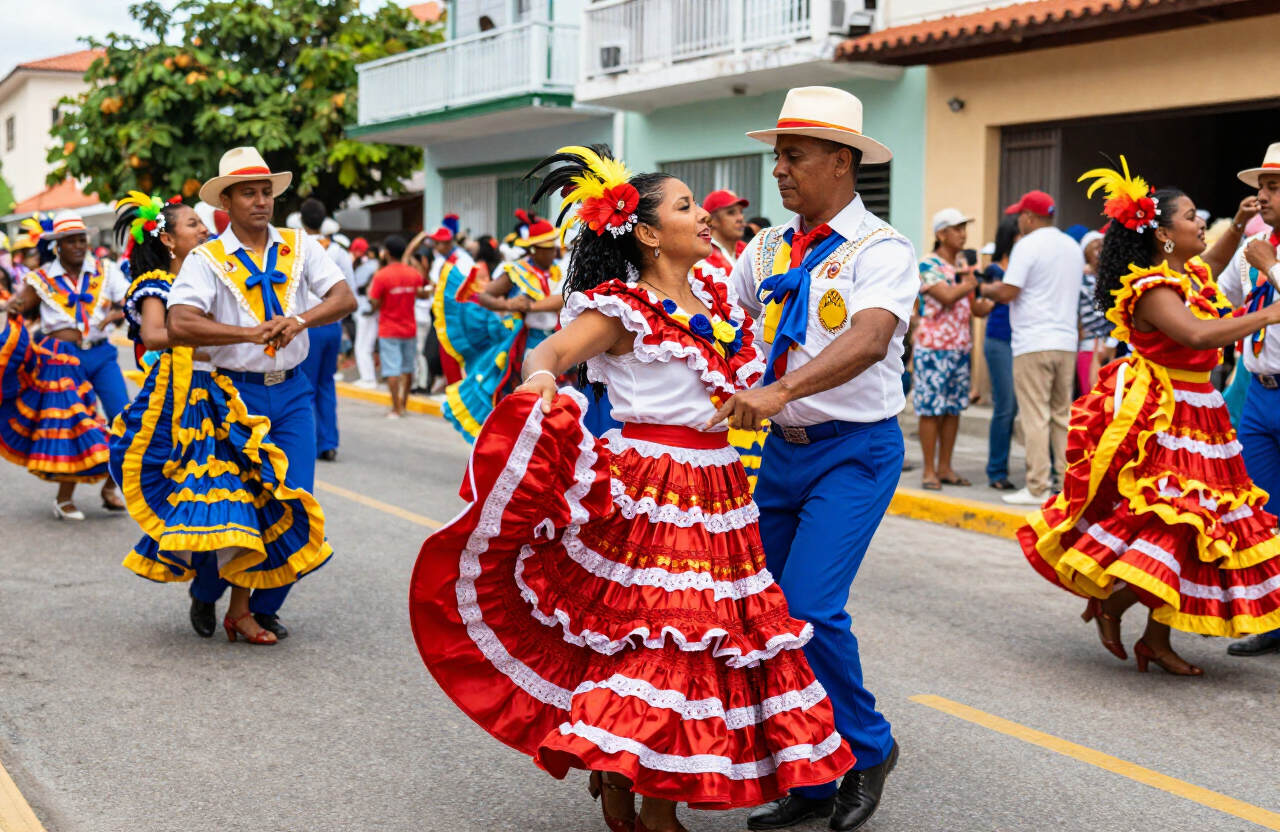
Every Sunday in February, the streets of La Vega fill with devils. Not literal ones, but diablos cojuelos — dancers in wildly ornate, horned masks and bell-covered capes, cracking inflated cow-bladder whips called vejigas at anyone within reach, all in the name of Carnaval.
La Vega’s celebration is widely considered the most intense in the country, a title earned through sheer noise, color, and choreography passed down through comparsas — carnival troupes that spend the whole year designing that year’s costume theme and rehearsing routines.
The final Sunday, Carnaval Cierre, draws hundreds of thousands into the capital of the Cibao region for a parade that can run for hours, culminating in fireworks and a street party that doesn’t really end until dawn.
If you go: wear clothes you don’t mind getting whipped in (lightly — it stings but it’s tradition), keep your phone in a zip pocket, and don’t be shy about dancing. Nobody stands still at La Vega.