If you have never been to Carnaval de La Vega, it is hard to explain just how much is happening at once. You hear the music before you even get close to the crowd, you see the colors and costumes everywhere you look, and then suddenly a diablo cojuelo comes running through the street with a vejiga in hand.
That is when you realize this is not the kind of carnival where you stand on the sidelines and watch.
Every Sunday in February, La Vega comes alive for one of the biggest celebrations in the Dominican Republic. The streets fill with diablos cojuelos, elaborate costumes, music, dancing, food, and thousands of people who come ready to spend the entire day celebrating.
And yes, you might get hit with a vejiga.
That is part of the tradition.
Carnaval de La Vega is one of those Dominican experiences that is difficult to fully understand from pictures. You can see the incredible masks and costumes, but you cannot see the noise, the music, the energy of the crowd, or the way the entire city seems to get swept up in the celebration. You really have to be there.
What is Carnaval de La Vega?
Carnaval de La Vega is one of the oldest and most important carnival celebrations in the Dominican Republic. Every Sunday throughout February, the city becomes a giant outdoor celebration filled with music, dancing, costumes, parades, and crowds lining the streets.
The main characters are the diablos cojuelos, and you will know them when you see them.
Their costumes are impossible to miss. The masks are colorful and often covered with exaggerated faces, horns, teeth, and other details, while the costumes themselves can be covered in bells, ribbons, and bright fabrics.
The traditional vejiga is part of the costume too. Originally made from an inflated animal bladder, it is used to playfully hit people watching the parade. Getting a little tap from a diablo cojuelo is part of the experience, although you will definitely want to keep an eye on where those vejigas are swinging.
Why La Vega is so famous
Carnival happens throughout the Dominican Republic, and different towns have their own characters, traditions, music, and styles.
La Vega, however, has become especially famous for the size and energy of its celebration.
The city is in the Cibao region, an area deeply connected to Dominican culture and traditions, and Carnaval has become an important part of the identity of La Vega itself.
The celebration is not something that suddenly appears when February arrives. The preparations happen throughout the year.
Carnival groups, known as comparsas, work on their costumes, characters, music, and choreography well before the first Sunday of Carnaval. Some groups spend months developing elaborate themes and creating costumes that can take a tremendous amount of time and craftsmanship to complete.
That is one of the things that makes watching the parade so interesting. You are not just seeing people put on costumes and walk through the streets. You are seeing traditions, creativity, competition, and months of preparation come together in one enormous celebration.
The diablos cojuelos
If you only remember one thing about Carnaval de La Vega, remember the diablos cojuelos.
The character is one of the most recognizable figures in Dominican Carnaval. The name is often translated as “limping devil,” and the character has a long history within Dominican carnival traditions.
There are different styles and variations depending on the carnival and the group, but in La Vega, the diablos are known for their spectacular masks and costumes.
They dance through the streets, interact with the crowd, and use their vejigas to playfully smack spectators.
And yes, you may get hit.
That is part of the tradition, but you should still use common sense. The crowds can be packed, and a vejiga can definitely sting if you get caught by a hard swing. If you are bringing children, keep them close and pay attention when the diablos are moving through the crowd.
Carnaval Cierre
While every Sunday in February brings its own celebration, the final Sunday is the big one.
Known as Carnaval Cierre, the closing celebration brings together huge crowds for one last parade through La Vega. This is when you really see the scale of the celebration.
The streets fill with spectators, carnival groups, music, dancing, food vendors, and people dressed up for the occasion. The parade can go on for hours, and the energy builds throughout the day.
By the time the celebration reaches its finale, La Vega feels less like a city hosting a carnival and more like one giant party.
If you are planning your trip specifically around Carnaval, this is the day you will want to experience. Just be prepared for crowds.
What to expect when you go
Do not expect to stand quietly on the side of the street and watch the parade go by.
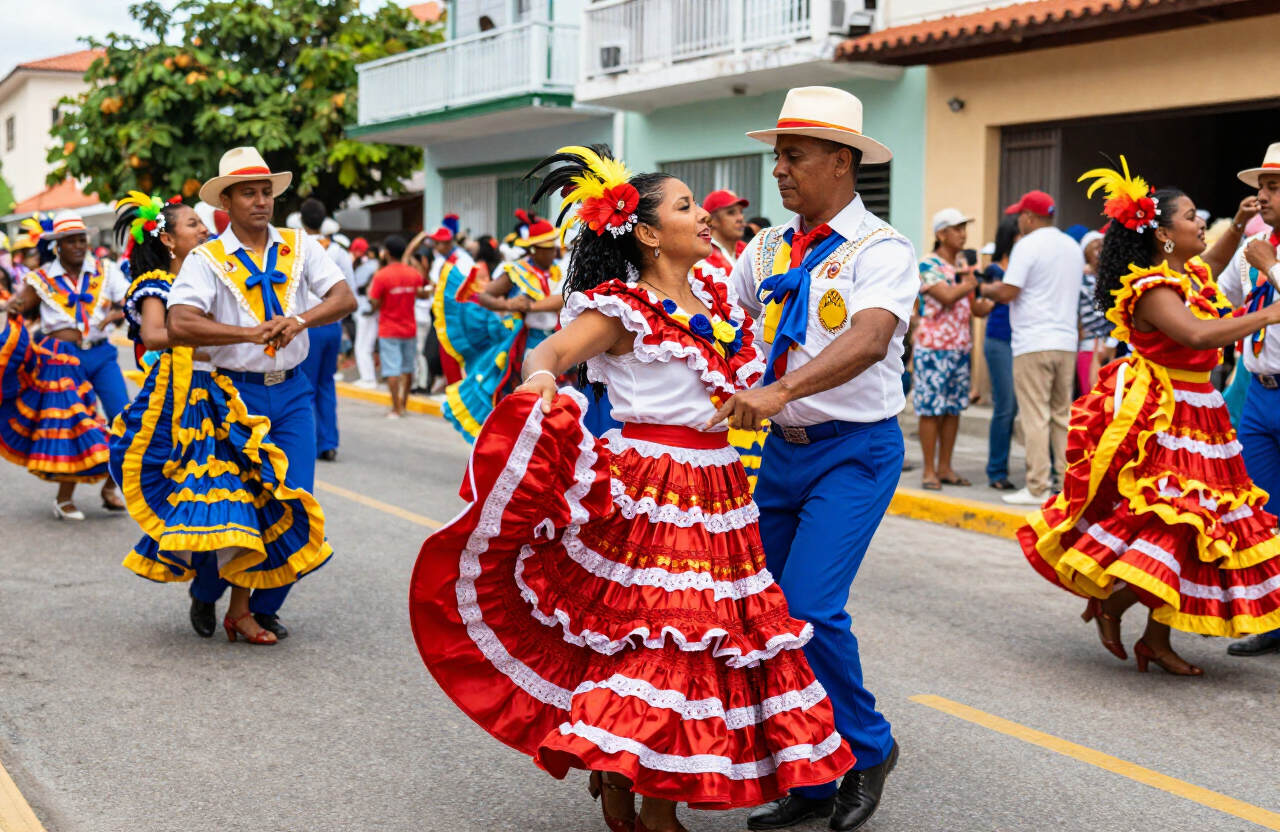
Dominican Carnaval is interactive. People dance, sing, take photos, yell, laugh, and move with the music. Even if you arrive planning to simply observe, it is hard not to get pulled into the energy.
You will also hear a lot of music coming from different directions, from carnival groups to DJs and live performers. Between the music, the crowds, the costumes, and the constant movement, it can be overwhelming in the best possible way.
And then there is the food.
Like any big Dominican celebration, Carnaval is also a good excuse to eat. You will find street vendors selling typical Dominican snacks, drinks, fried foods, and plenty of things to keep you going while you spend hours outside.
What to wear
Leave the nice outfit at home.
Wear comfortable clothes and shoes that you do not mind getting dirty or a little banged up. You are going to be walking, standing, dancing, and moving through crowds for hours.
And if you are worried about getting hit by a vejiga, there is no guaranteed way to avoid it. The best thing you can do is stay aware of your surroundings and accept that getting a playful tap from a diablo is part of being at Carnaval.
You should also keep your belongings secure. A crowded carnival is not the place to walk around with your phone hanging out of your back pocket. A small crossbody bag worn close to your body or a secure zippered pocket is a much better idea.
Come ready to dance
The best way to experience Carnaval de La Vega is to stop worrying about looking like a tourist.
You do not have to know every dance or understand every tradition before you arrive. Watch what people around you are doing, enjoy the music, and let yourself have fun.
Nobody expects you to stand perfectly still while everyone else is dancing.
Carnaval is loud, colorful, crowded, chaotic, and completely Dominican. It is one of those experiences where the pictures are great, but they really do not capture what it feels like to be standing in the middle of La Vega while the music is blasting, the diablos are moving through the crowd, and the entire city is celebrating around you.
If you have never experienced Dominican Carnaval, La Vega is a great place to start.
Just bring comfortable shoes, keep your phone somewhere secure, and remember to watch out for the vejigas.