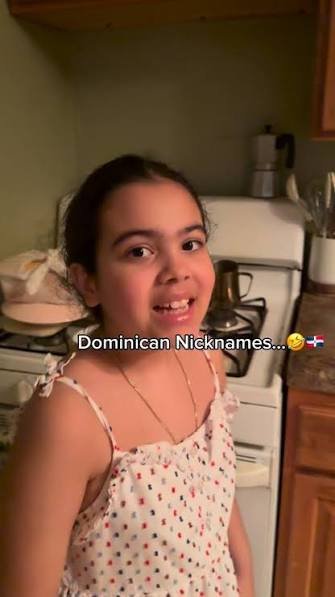
If you spend enough time around Dominicans, you will probably notice something pretty quickly: almost everyone has a nickname.
And sometimes, you might know the nickname long before you know the person’s real name.
A Dominican family can have a José who is called Pepe, a Francisco who is Pancho, a Rafael who is Felo, and a Carmen who has been called Carmencita since childhood. Then there are the nicknames that have absolutely nothing to do with someone’s actual name.
Someone might be known as El Flaco, La Flaca, Chino, Chichí, Papo, Yeyo, Negra, Gordo, Gorda, Tito, Nena, or a name that only makes sense once someone tells you the story behind it.
Nicknames are such a normal part of Dominican life that hearing someone called by their full legal name can almost sound strange.
Nicknames start young
For many Dominicans, the nickname starts in childhood.
A child might get a nickname from their parents, grandparents, siblings, neighbors, or friends. Sometimes it comes from their real name. Other times it comes from something they did, the way they looked as a baby, their personality, or simply a funny moment that happened once and somehow stuck forever.
And once a nickname sticks, good luck getting rid of it.
A person who was called Papo by their family as a little boy might still be Papo decades later. Their childhood friends call them Papo, their neighbors call them Papo, and eventually their coworkers might start calling them Papo too.
The real name almost becomes secondary.
Sometimes the nickname has nothing to do with the name
This is one of the funniest parts of Dominican nickname culture.
You can meet someone whose nickname gives you absolutely no clue what their real name is.
A person named José might be known as Tito. Someone named Ramón might be called Monchi. A tall person might become El Flaco. A short person might end up with a nickname that means the complete opposite.
Nicknames can come from physical characteristics, personality traits, childhood habits, occupations, or just something funny that happened years ago.
And Dominicans are very creative when it comes to coming up with them.
Appearance can inspire a nickname
Some of the most common Dominican nicknames come from the way someone looks.
Someone thin might be called Flaco or Flaca. A person with a darker complexion might be given a nickname like Negro or Negra. Someone with curly hair might get a nickname related to their hair.
Chino or China can also be used as a nickname, often referring to someone’s appearance or features.
These names can sound surprising to outsiders because they may seem too direct. But within Dominican families and friendships, the meaning and tone depend heavily on the relationship between the people using them.
A nickname that sounds blunt coming from a stranger can sound completely affectionate coming from a grandmother, cousin, or childhood friend.
Some nicknames come from personality
Not every nickname is about appearance.
Someone who is always joking might get a nickname connected to being funny. Someone who is always moving around might get one that reflects their energy. A person who loves to eat, sleep, dance, talk, or play baseball can end up with a nickname connected to that habit.
Sometimes the nickname captures a person’s personality so well that it becomes difficult to imagine them being called anything else.
Family names can become nicknames
Dominican families also have plenty of shortened versions of names.
José can become Joseíto or Pepe. Francisco can become Pancho. Rafael can become Felo. Ramón can become Monchi.
There are also affectionate endings such as “ito” or “ita” that can make a name sound smaller, younger, or more affectionate.
Someone named Carmen might be Carmencita. Rosa might become Rosita. Juan might become Juanito.
These variations are especially common within families and can stick around long after someone has grown up.
A nickname can become your identity
One of the interesting things about Dominican nickname culture is how completely a nickname can become part of someone’s identity.
You might introduce yourself by your nickname instead of your real name.
Someone might say, “Yo soy Papo,” and that is all you need to know.
Friends may not even realize someone’s full name because everyone has always called them by the nickname.
This is especially common in smaller communities where people have known each other for years. Your nickname becomes part of how people recognize you.
One person can have several nicknames
And then things get even more Dominican.
One person can have multiple nicknames depending on who is talking to them.
Your family might call you one thing. Your childhood friends might call you something completely different. Your coworkers might know you by another nickname. And there may be one nickname that only your mother uses.
Sometimes the nickname changes as you get older.
A childhood nickname can follow you into adulthood, while another one develops among friends or at work.
There is not necessarily a single official nickname. You can collect them over the years.
Nicknames are often affectionate
Although Dominican nicknames can sometimes sound teasing, they are very often expressions of affection.
Dominicans tend to have a playful way of interacting with family and friends. Teasing someone can be a sign of closeness, and a funny nickname can become part of that relationship.
A cousin might tease you about something you did when you were five years old and turn it into your nickname for the next twenty years.
And if everyone knows the story, nobody needs to explain it.
That shared history is part of what makes nicknames meaningful.
The tone matters
This is important if you are learning Dominican Spanish.
A nickname is not automatically appropriate just because you hear Dominicans using it.
Some nicknames are affectionate between family and friends but can sound rude or disrespectful when used by someone who does not have that relationship.
The tone, relationship, and context matter.
Dominican Spanish can be very playful and direct, but that does not mean every nickname should be repeated with everyone you meet.
If someone introduces themselves by their nickname, though, that is usually a good sign that they are comfortable being called that.
Nicknames are everywhere
You will hear nicknames at family gatherings, in neighborhoods, at baseball games, at work, and in everyday conversations.
You might hear someone yell across the street, “¡Papo!” and five people turn around because three of them are called Papo.
That is another thing about Dominican nicknames: they are not always particularly unique.
There can be several people in the same neighborhood with the same nickname, which means everyone has to rely on context to figure out who is being called.
Sometimes the story behind the nickname is the best part
A lot of Dominican nicknames have stories behind them.
Maybe someone had a funny childhood habit. Maybe a grandparent started calling them something when they were little. Maybe they looked like a famous person. Maybe they did something embarrassing once and their friends never let them forget it.
Sometimes the person with the nickname does not even remember how it started.
But everyone else does.
That is part of the fun. A nickname can carry a little piece of family or neighborhood history with it.
Nicknames and Dominican culture
The Dominican tradition of nicknames says a lot about how relationships work in Dominican culture.
There is a lot of familiarity. People often form close relationships with neighbors, extended family, coworkers, and childhood friends. Humor is a big part of those relationships, and nicknames become another way of showing that someone belongs to the group.
It is also one of those everyday details that you might not notice in a travel guide.
You can learn all about Dominican food, beaches, baseball, and music, but spending time around Dominicans will teach you something else: sometimes the person everyone is calling is not using the name written on their birth certificate at all.
They are using the name everyone has known them by for years.
Why Dominicans have so many nicknames
There is no single rule for Dominican nicknames.
Some come from names. Some come from appearance. Some come from personality. Some come from childhood stories. Some are completely random.
But they all have something in common: they are personal.
A nickname can tell you where someone comes from, who they grew up with, what their family calls them, or even what they were like as a child.
And once a Dominican nickname sticks, it can follow you for life.
So if you meet a Dominican and someone says, “His name is Rafael, but everybody calls him Felo,” do not be surprised.
That is just how it works.
You may know someone for years and never call them by their full name. In the Dominican Republic, sometimes the nickname is the name that really belongs to you.