The Dominican peso is the official currency of the Dominican Republic, and if you’re visiting the country for the first time, understanding how Dominican money works can make everyday purchases much easier.
The currency is written as DOP internationally and usually shown with the $ symbol in the Dominican Republic. That can be confusing for visitors because the same symbol is also used for U.S. dollars. If you see a price written as $500 in the Dominican Republic, it usually means 500 Dominican pesos, not 500 U.S. dollars.
The Dominican peso
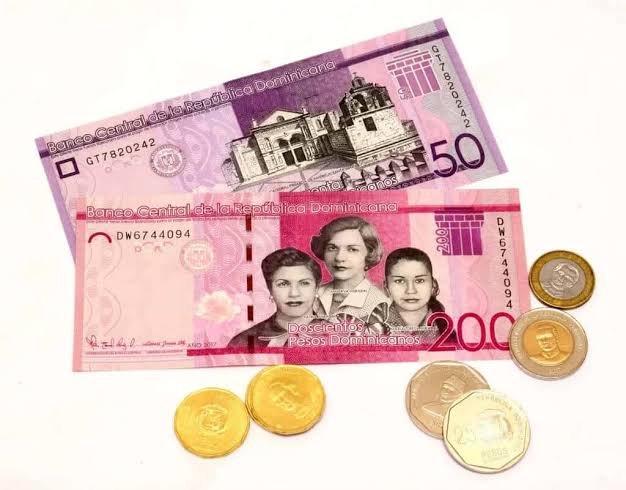
The Dominican peso is the official currency of the Dominican Republic. Bills and coins come in different denominations, and you’ll use pesos for everything from a bottle of water at a colmado to transportation, restaurants, shopping, and local attractions.
Dominican banknotes commonly come in denominations of 50, 100, 200, 500, 1,000, and 2,000 pesos.
Coins are also used, although smaller denominations may not always be as common in everyday transactions.
Why prices can look confusing
One of the first things visitors notice is the $ sign.
In the Dominican Republic, a restaurant menu might list something as “$350.” That does not necessarily mean US$350. It generally means 350 Dominican pesos.
This is especially important when you’re looking at prices online, reading menus, or shopping in local businesses.
When you’re unsure, simply ask whether the price is in pesos or dollars.
Can you use U.S. dollars?
U.S. dollars are widely accepted in many tourist areas, particularly at hotels, resorts, tour companies, and some restaurants and businesses.
However, that does not mean you should expect to use dollars everywhere.
Smaller local businesses, public transportation, neighborhood shops, and other everyday businesses generally operate in Dominican pesos. Even when dollars are accepted, you may receive your change in pesos.
For that reason, having some Dominican pesos with you is always useful.
Should you exchange money before your trip?
You don’t necessarily need to exchange all your money before arriving in the Dominican Republic.
There are banks, ATMs, and currency exchange businesses throughout the country. Airports and tourist areas also have places where travelers can exchange currency.
However, exchange rates can vary, so it is worth comparing the rate and any fees before exchanging a large amount of money.
Avoid exchanging more money than you need at once, especially if you’re staying in the country for a short trip.
Using ATMs in the Dominican Republic
ATMs are widely available in larger cities, tourist areas, shopping centers, banks, and other busy locations.
You can often withdraw Dominican pesos using a foreign debit or credit card, although your bank may charge an international transaction or ATM fee.
The ATM itself may also charge a fee.
If you plan to use an ATM, it’s a good idea to use one located inside a bank or another secure, well-known location rather than relying on random machines.
Credit and debit cards
Cards are widely accepted in hotels, larger restaurants, supermarkets, stores, and many businesses in tourist areas.
Visa and Mastercard are generally easy to use.
But you shouldn’t rely entirely on your card.
Smaller restaurants, colmados, street vendors, local transportation, and some businesses may only accept cash. Having some pesos available can save you from having to search for an ATM when you need it.
Cash is still useful
Even if you normally pay for everything with a card, cash is still an important part of everyday life in the Dominican Republic.
You may need pesos for things like:
- Small neighborhood stores
- Colmados
- Street food
- Motoconchos
- Some taxis
- Tips
- Parking
- Local markets
- Small purchases
Carrying a reasonable amount of small bills is particularly helpful because smaller businesses may not always have enough change for a large denomination.
Tipping in the Dominican Republic
Tipping practices can vary depending on where you are.
At restaurants, check your bill first because a service charge may already be included. If it isn’t, leaving an additional tip is appreciated when you receive good service.
Tips are also common for hotel staff, tour guides, drivers, and other service workers.
The amount depends on the situation, so there isn’t necessarily one fixed amount you need to tip everyone.
Don’t assume every price is in pesos
Tourist businesses sometimes display prices in U.S. dollars, especially for excursions, hotels, tours, and other services aimed at international visitors.
This is different from seeing a local price written with a “$” sign.
If you’re comparing prices, make sure you know which currency you’re looking at before deciding whether something is expensive or affordable.
A quick example
Imagine you’re at a Dominican restaurant and see a menu item listed for $450.
If the restaurant is pricing everything in Dominican pesos, you’re looking at 450 DOP, not US$450.
If you’re not familiar with the exchange rate, you can quickly check the current conversion on your phone.
The exact value of the Dominican peso compared with the U.S. dollar changes over time, so it’s better to check the current rate when you’re planning your trip rather than relying on an old conversion.
What should you carry?
For most travelers, a combination of payment methods works best.
Keep your main spending money secure, carry some Dominican pesos for smaller purchases, and have a debit or credit card available for larger expenses.
You don’t need to walk around with a huge amount of cash.
The goal is simply to have enough local currency for situations where cards or dollars aren’t practical.
Understanding Dominican money makes traveling easier
Once you get used to seeing prices in Dominican pesos, the currency becomes much less confusing.
The biggest thing to remember is that the $ symbol in the Dominican Republic usually refers to pesos, while some tourist businesses may quote prices in U.S. dollars.
Having some pesos, keeping a card available, and knowing roughly what things cost will make everything from ordering lunch to taking transportation much easier.
And if you’re ever unsure about a price, just ask. It’s much better to clarify the currency before paying than to make an assumption.